Outside the Citadel: How Grassroots Scholar Networks Are Redefining Academic Authority

Photo: Ganesh Mohan T, CC BY-SA 4.0, via Wikimedia Commons
For generations, the architecture of American academic life has been largely fixed: a tenured faculty member at a research university convenes a conference, a prestigious press publishes the proceedings, and the field moves forward. Authority traveled in one direction, and access to that authority was conditioned on institutional affiliation, funding, and proximity to established centers of power. That architecture is being quietly dismantled—not by administrative reform or federal mandate, but by scholars who have decided they cannot wait for the citadel to open its gates.
Across the United States, independent symposiums, digital reading collectives, and scholar-led working groups are proliferating at a pace that would have seemed improbable a decade ago. What distinguishes these formations from earlier iterations of academic dissent is not simply their critique of mainstream institutions, but their commitment to building durable, self-sustaining knowledge infrastructures in their place.
The Structural Problem That Sparked a Movement
The emergence of these networks cannot be understood apart from the structural conditions that produced them. BIPOC scholars, disabled academics, and researchers holding contingent or adjunct appointments have long encountered what many describe as a double burden: the labor of producing scholarship while simultaneously navigating institutions that were not designed with their participation in mind. For many, the traditional conference circuit has functioned less as a site of collegial exchange than as a mechanism for reproducing existing hierarchies.
The costs are not merely symbolic. Registration fees for major disciplinary conferences frequently exceed several hundred dollars, a figure that does not account for travel, accommodation, or the indirect costs borne disproportionately by scholars without institutional support. For the roughly forty percent of American faculty employed on contingent terms—a figure that has held stubbornly high across the past two decades—these barriers are not incidental inconveniences but meaningful exclusions from the conversations that shape a field.
Disabled academics have articulated an additional layer of exclusion. Until recently, the overwhelming majority of major scholarly gatherings were designed with able-bodied attendance as the default assumption. The rapid normalization of virtual participation during the pandemic years offered a glimpse of what genuine accessibility might look like, but many scholars report that mainstream conferences have since retreated to pre-pandemic formats, treating hybrid or remote options as afterthoughts rather than structural commitments.
What Grassroots Forums Are Actually Producing
It would be a mistake to characterize these independent networks as primarily reactive—defined by what they oppose rather than what they create. The intellectual output emerging from scholar-led symposiums is, by a number of measures, substantive and consequential.
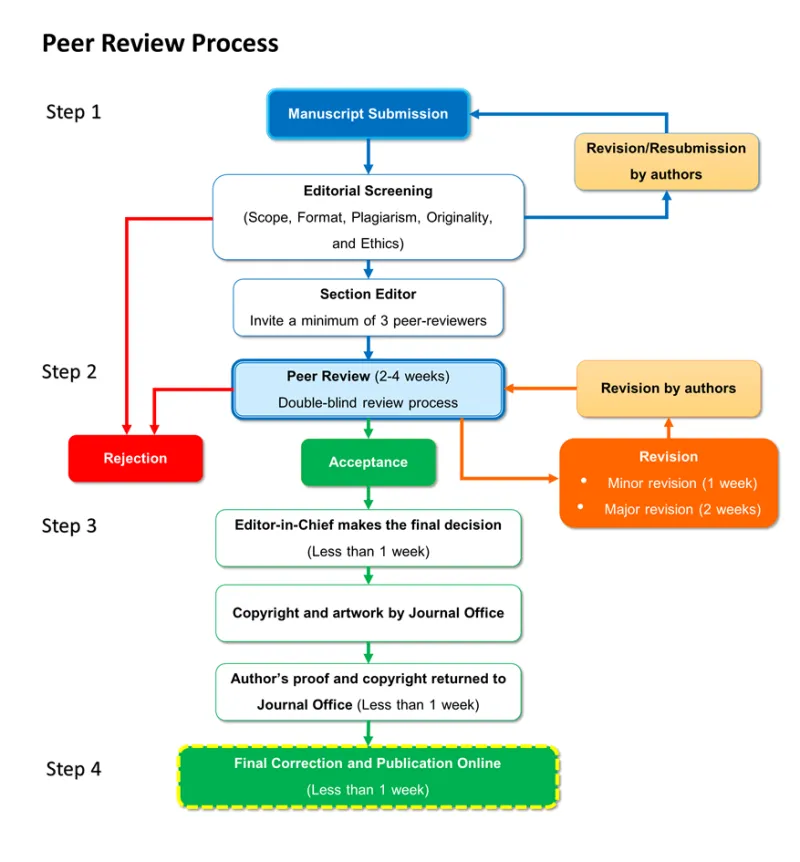
Several such collectives have developed peer review processes that differ meaningfully from traditional models. Rather than routing manuscripts through a small number of anonymous reviewers selected by a journal editor, some grassroots networks employ what participants describe as community-accountable review: a transparent process in which reviewers are known to authors, feedback is iterative, and the criteria for evaluation are developed collectively by the scholarly community itself. Proponents argue that this model produces more rigorous and more honest critique precisely because it is embedded in relationships of mutual accountability rather than institutional hierarchy.
Mentorship is another domain in which these networks are generating distinctive value. The formal mentorship structures that exist within universities tend to reproduce the priorities and methodologies of senior faculty, a dynamic that can be particularly constraining for scholars whose research questions emerge from lived experiences outside the mainstream of a discipline. Informal symposium networks frequently operate across institutional boundaries, connecting early-career researchers with more established scholars who share their intellectual and methodological commitments regardless of departmental affiliation.
Legitimacy, Recognition, and the Question of Credentials
Perhaps the most contested dimension of this movement concerns the question of legitimacy. Within conventional academic culture, the authority of a scholarly claim is substantially derived from the institutional and publication context in which it appears. Work that circulates primarily through independent networks, however rigorous, may not receive the same recognition in hiring, promotion, or grant review processes.
This tension is real, and scholars working within these networks are candid about it. Some describe a deliberate strategic calculation: building independent infrastructure while simultaneously seeking to publish in venues that carry institutional recognition, treating the two tracks as complementary rather than mutually exclusive. Others have made a more explicit break, arguing that the legitimacy conferred by traditional institutions is itself a product of historical exclusions that ought to be challenged rather than accommodated.
What is perhaps most significant is that this debate is increasingly taking place within mainstream academic institutions as well as outside them. A number of universities, particularly those with explicit commitments to equity and inclusion, have begun to grapple with how to recognize and credit scholarly work produced in non-traditional contexts. Some promotion and tenure committees have revised their evaluation criteria to account for community-engaged research, public scholarship, and contributions to scholarly networks that do not map neatly onto the conventional publication record.
The Knowledge These Networks Are Making Possible
Beyond questions of access and recognition, there is a substantive intellectual argument for the value of these formations. Scholars whose research emerges from the margins of a discipline—or from experiences systematically excluded from its mainstream—are frequently positioned to see what the center cannot. The history of American intellectual life offers ample evidence that paradigm-shifting contributions have often originated in precisely those communities that were most systematically excluded from formal scholarly authority.
Grassroots symposiums are creating conditions in which those contributions can be developed, tested, and refined in community before they encounter the gatekeeping structures of mainstream publication. In this sense, they function not merely as alternatives to traditional conferences but as incubators for knowledge that might otherwise be lost or deferred indefinitely.
The scholars building these networks are not, by and large, asking to be left alone. Most express a desire for their work to enter into genuine dialogue with the broader scholarly community. What they are insisting upon is that such dialogue occur on terms that do not require them to subordinate their intellectual commitments or their identities to institutional conventions they had no hand in shaping.
A Reckoning the Academy Cannot Defer
The proliferation of independent scholarly networks presents American academic institutions with a choice that grows more consequential with each passing year. These formations can be dismissed as peripheral—or they can be recognized as evidence that the existing infrastructure of scholarly communication is failing a significant portion of the researchers it purports to serve.
The symposium, in its most elemental form, is a gathering of minds committed to advancing understanding through dialogue. What the grassroots scholars building these networks are demonstrating is that such gatherings do not require institutional sanction to be genuine, rigorous, or consequential. The academy's response to that demonstration will say a great deal about what it actually values.