Gatekeepers or Bottlenecks? Rethinking Peer Review in an Era of Urgent Science
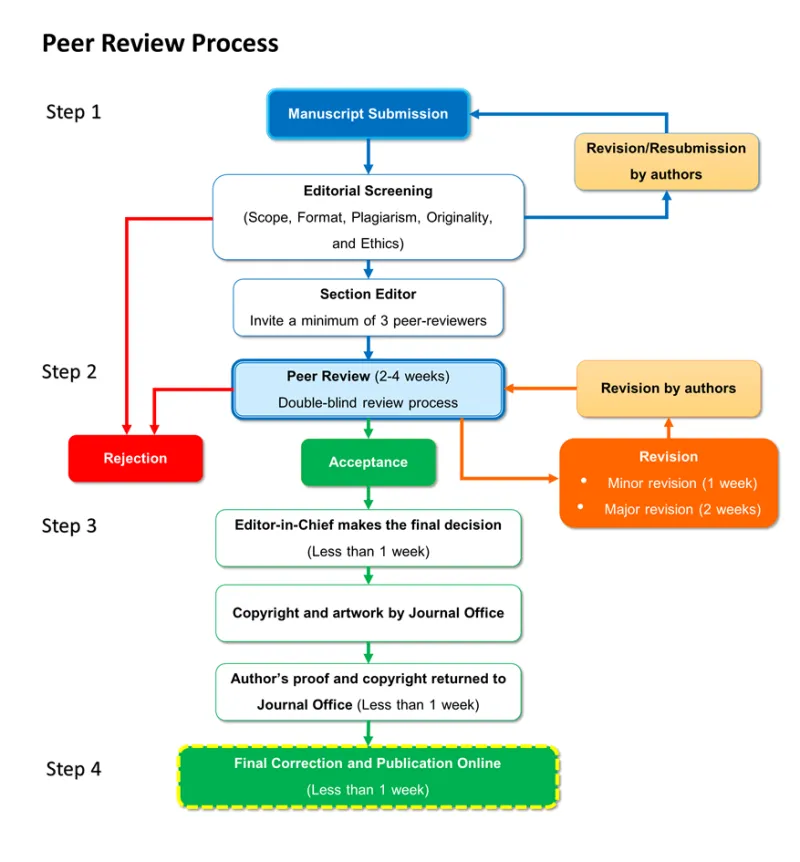
Photo: academic peer review process scholarly journal editorial board meeting, via ph02.tci-thaijo.org
For decades, anonymous peer review has functioned as academia's most trusted quality-control mechanism—a scholarly handshake confirming that a piece of research has passed muster with one's intellectual equals. Yet a growing chorus of researchers, journal editors, and policy observers is questioning whether that handshake has become a stranglehold. In fields where the stakes are measured not in citation counts but in human lives, delayed treatment approvals, or the trajectory of planetary warming, the traditional review cycle is increasingly perceived not as a safeguard but as a structural liability.
The numbers are difficult to dismiss. Retraction Watch, the widely consulted database tracking withdrawn scientific papers, logged record-level retractions in 2023, with fraudulent studies having sometimes circulated for years before removal. Meanwhile, the average time from manuscript submission to publication in leading medical journals routinely exceeds twelve months—a timeline that proved catastrophically inadequate during the COVID-19 pandemic, when preprint servers like medRxiv became de facto primary sources for clinicians and policymakers alike.
The Anonymity Problem
The peer review system's defining feature—reviewer anonymity—was originally conceived as a shield against bias, protecting evaluators from professional retaliation when assessing the work of senior colleagues. In practice, however, anonymity has become a vector for a different kind of distortion. Without accountability, reviewers may suppress unconventional findings that challenge prevailing paradigms, prioritize incremental work over paradigm-shifting research, or allow personal rivalries to color their assessments.
A 2022 study published in PLOS ONE found that papers proposing novel methodologies were rejected at significantly higher rates than those employing established techniques, even when controlling for methodological rigor. In climate science specifically, researchers working on feedback loop dynamics and tipping-point thresholds have reported multi-year delays attributed, at least in part, to reviewers with institutional ties to legacy energy modeling frameworks. The chilling effect on unconventional thinking is difficult to quantify but widely acknowledged at symposia and disciplinary conferences across the country.
In AI safety research, the problem takes a different shape. The field moves at a velocity that quarterly journal cycles cannot accommodate, yet the consequences of unvalidated findings reaching policymakers or engineers are severe. When major AI governance decisions are made with reference to research that has not been rigorously reviewed—or, conversely, when critical safety findings sit in editorial queues for eighteen months—the dysfunction becomes a matter of public consequence, not merely academic inconvenience.
Emerging Alternatives Gaining Traction
The response from within the scholarly community has been neither uniform nor without controversy, but it has been substantive. Open peer review—in which reviewer identities are disclosed alongside their assessments—has gained meaningful adoption in journals published by PLOS, eLife, and several Frontiers imprints. Proponents argue that transparency creates accountability without sacrificing rigor; critics contend that junior reviewers will self-censor when evaluating the work of established figures whose goodwill they depend upon for career advancement.
Post-publication commentary systems represent a more radical departure. Platforms such as PubPeer allow the broader scholarly community to annotate published work, effectively distributing the validation function across a much larger pool of evaluators. The model has demonstrated real-world impact: several high-profile retractions, including papers related to Alzheimer's disease research and oncology, were initiated by PubPeer threads rather than formal editorial investigations. The limitations are equally real—commentary threads can reflect community consensus rather than genuine methodological scrutiny, and popular papers attract disproportionate attention regardless of their actual epistemic importance.
Domain-specific innovations may prove the most durable. The arXiv preprint server, long established in physics and mathematics, has expanded its reach into quantitative biology and economics, enabling rapid dissemination while formal review proceeds in parallel. In medicine, the BMJ's open peer review trial, now entering its second decade, has produced a body of evidence suggesting that transparency modestly improves review quality while having a negligible effect on reviewer willingness to participate. The American Chemical Society and several engineering professional bodies have piloted tiered review systems that distinguish between technical validation and broader significance assessment—separating questions of "is this correct?" from "does this matter?"
Institutional Resistance and the Reform Paradox
Despite the momentum behind these alternatives, institutional inertia remains formidable. Tenure and promotion committees at research universities continue to weight publications in high-impact, traditionally reviewed journals above all other scholarly outputs. This creates a perverse incentive structure: even researchers who privately acknowledge the system's failures are professionally compelled to participate in and perpetuate it. Reforming peer review without reforming the reward structures that make journal prestige a career currency is, as one panelist at a recent scholarly communication conference observed, analogous to redesigning the engine while leaving the fuel supply unchanged.
Funding agencies have begun to apply pressure from a different direction. The National Institutes of Health and the National Science Foundation have both issued policy statements encouraging grantees to deposit findings in open-access repositories, and the White House Office of Science and Technology Policy's 2022 memorandum mandating public access to federally funded research has accelerated the conversation around what "validated" research actually means when it reaches public repositories before formal review is complete.
Toward a More Accountable Architecture
What the current moment demands is not the abolition of peer review but its architectural renovation. Several principles appear consistently in the reform literature: greater transparency in reviewer identity and criteria, faster turnaround mandates enforced by editorial boards, structured separation of technical review from significance evaluation, and formal mechanisms for post-publication correction that carry the same institutional weight as original publication decisions.
The scholarly community's challenge is to design systems that preserve the epistemic rigor that makes peer review valuable while eliminating the bottlenecks, biases, and accountability gaps that make it increasingly untenable in high-velocity, high-consequence fields. That design challenge is itself an intellectual problem worthy of the symposium format—one that requires the kind of cross-disciplinary, open dialogue that the current system, ironically, is least well equipped to facilitate.
The conversation is overdue. In medicine, in climate science, and in AI safety, the cost of delay is no longer abstract.