The Margins Hold the Map: How Precarious Academics Are Reinventing Scholarly Gathering

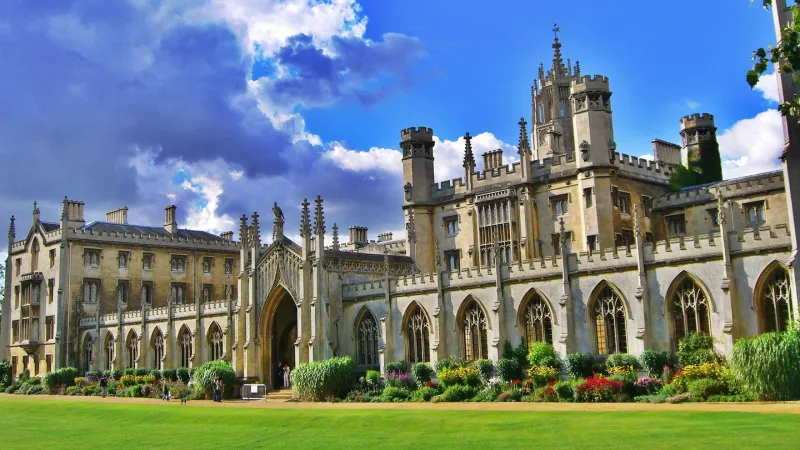
Photo: Mike Dickison, CC BY 4.0, via Wikimedia Commons
There is a particular irony embedded in the current state of American academic labor. The scholars who are most systematically excluded from the institutional rewards of university life—contingent faculty working semester-to-semester, postdoctoral researchers on temporary appointments, independent academics without affiliation—are, by a growing body of evidence, among the most organizationally innovative people in their fields. While tenured faculty navigate the procedural weight of departmental governance and administrators manage the competing demands of enrollment and endowment, it is often the precariously employed who are building the intellectual infrastructure that will define the next decade of scholarly exchange.
This is not a story about resilience in the face of adversity, though resilience is certainly present. It is a story about structural conditions that, by removing certain constraints, inadvertently create space for a different kind of intellectual risk-taking.
Freedom at the Margins
The tenured professor operates within a web of institutional obligations that are, individually, entirely reasonable: committee service, curriculum review, departmental politics, alumni engagement, grant reporting. Collectively, however, these obligations consume the discretionary time and intellectual energy that might otherwise go toward organizing experimental scholarly events, building cross-institutional networks, or designing conference formats that depart from the standard panel-and-Q&A model that has dominated academic gatherings for generations.
The contingent scholar, by contrast, is frequently institution-adjacent rather than institution-embedded. Teaching obligations may be substantial, but the committee load is typically minimal, the political entanglements fewer, and the reputational investment in established disciplinary hierarchies considerably lower. This position at the margins, while economically precarious, affords a degree of organizational freedom that tenured colleagues often privately envy.
The results are visible in the conference landscape. Unconferences, barcamp-style scholarly gatherings, and hybrid digital-physical symposia that prioritize participant-driven agenda-setting over pre-planned panel rosters have proliferated over the past decade, and a disproportionate share of their organizers hold contingent or non-institutional positions. The Graduate Student Assembly model, which has existed in various forms for decades, has evolved into something considerably more ambitious: structured scholarly communities that produce working papers, organize peer review for independent journals, and maintain year-round intellectual dialogue rather than convening once annually around a hotel ballroom.
Case Studies in Grassroots Intellectual Leadership
The Digital Humanities community offers one of the most extensively documented examples of this phenomenon. THATCamp—The Humanities and Technology Camp—was conceived and initially organized not by senior faculty at research universities but by junior scholars and graduate students who found traditional conference formats poorly suited to the collaborative, iterative nature of digital methods work. The model spread rapidly across the country and internationally, influencing conference design in fields far removed from digital humanities. Its founders, many of whom held contingent positions at the time of THATCamp's peak influence, are now recognized as architects of a significant shift in how scholarly communities organize themselves.
In the social sciences, independent reading groups that began as informal gatherings of adjunct instructors and recent PhDs have evolved into recognized scholarly networks with their own publication series and annual convenings. Several of these networks have attracted participation from senior faculty who initially regarded them with institutional condescension, drawn in by the quality of the intellectual exchange and the organizational efficiency that leaner, less bureaucratic structures permit.
Within STEM fields, the pattern appears somewhat differently but is no less present. Early-career researchers in computational biology and materials science have organized domain-specific virtual symposia that routinely attract participation from established investigators who find the focused, fast-moving format more intellectually productive than the sprawling programs of major disciplinary conferences. The organizers of these events, frequently postdoctoral researchers or assistant professors at non-R1 institutions, have built reputational capital that translates, unevenly but meaningfully, into career advancement.
What Stable Institutions Are Missing
The counter-intuitive success of precarious scholars as symposium organizers and community builders points toward a diagnostic question that the American research university has been slow to take seriously: what does institutional stability actually optimize for? The evidence suggests that it optimizes effectively for sustained, resource-intensive research programs, for the mentorship of graduate students across multi-year relationships, and for the kind of long-horizon scholarship that requires decades of accumulated expertise. These are genuine and important functions.
What it optimizes less effectively for is intellectual agility—the capacity to respond quickly to emerging questions, to experiment with new formats for knowledge exchange, and to build communities across institutional boundaries that the prestige hierarchy of higher education tends to reinforce rather than dissolve. The contingent scholar, lacking the institutional identity that tenure confers, is often more willing to reach across those boundaries, more practiced at building community from limited resources, and more attuned to the intellectual interests of scholars at varying career stages because they have occupied nearly all of those stages simultaneously.
This is not an argument for contingency as a desirable condition. The exploitation of adjunct labor in American higher education is a structural injustice with well-documented consequences for teaching quality, scholar well-being, and the long-term health of academic disciplines. The insight that precarious conditions sometimes generate organizational innovation does not mitigate those consequences and should not be recruited as a justification for them.
Listening to the Architects of the Next Academy
What the phenomenon does suggest is that the American research university has something to learn from the scholarly communities being built at its margins—not by importing those communities wholesale into institutional structures that will inevitably reshape them, but by attending carefully to what makes them work. The emphasis on participant agency in agenda-setting, the preference for dialogue over performance, the cultivation of year-round intellectual community rather than annual convening: these are design principles that well-resourced institutions could adopt without requiring the precarity that currently produces them.
The scholars organizing these communities deserve more than the academy's admiration. They deserve its investment, its institutional support, and, above all, its honest acknowledgment that the intellectual map of American scholarship is increasingly being drawn from positions that the established order has consistently undervalued.