Stewarding the Scientific Record: How Research Institutions Are Building Archives for Raw Data
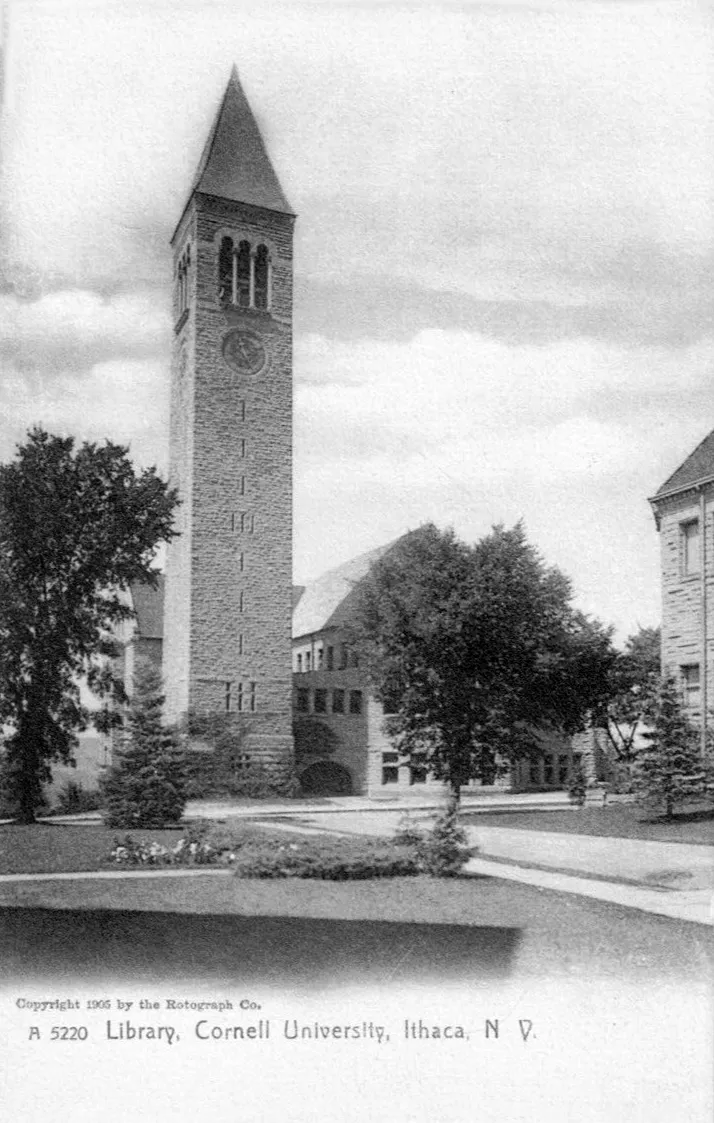
Photo: Rotograph Co., Public domain, via Wikimedia Commons
In the reading rooms of university libraries and the climate-controlled vaults of specialized archives, historians have long understood something that the natural and social sciences are only beginning to fully reckon with: primary sources are irreplaceable, and their loss is permanent. The manuscript that survives a medieval scriptorium, the correspondence that a biographer retrieves from a forgotten collection, the census ledger that a demographer photographs before it crumbles—these materials carry evidentiary weight that no secondary summary can replicate. The raw dataset, it turns out, is the scientist's equivalent of the primary source. And it has been disappearing at a troubling rate.
Recent estimates from data preservation researchers suggest that a substantial proportion of scientific datasets become inaccessible within a decade of the publication of the studies that generated them. Principal investigators change institutions, graduate students complete their degrees and move on, hard drives fail, and funding cycles end. What remains is the published article—the interpretation—while the underlying evidence quietly vanishes. The implications for reproducibility, for meta-analysis, and for the cumulative integrity of the scientific record are difficult to overstate.
The Humanities Model and Its Applicability to Science
The archival traditions of the humanities, developed over centuries of managing fragile and irreplaceable materials, offer a set of practices and principles that data scientists and research librarians are now actively translating into digital contexts. The parallels are instructive, if imperfect.
A medieval manuscript is preserved not merely because it is old, but because it is understood to be a primary source—an artifact that carries information no copy or paraphrase can fully substitute for. Archivists have developed elaborate protocols for cataloging, contextualizing, and providing access to such materials precisely because they understand that the value of primary sources is not always apparent at the moment of their creation. A document that seems peripheral to one generation of scholars may prove central to the next.
The same logic applies, with considerable force, to raw research data. A dataset collected for one purpose may contain variables that become relevant to entirely different research questions as a field evolves. Negative results—findings that did not support a hypothesis and were therefore never published—may carry crucial information about the boundaries of a theory or the conditions under which an effect does or does not obtain. The systematic loss of such data represents not merely a practical inconvenience but a genuine impoverishment of the scientific record.
Institutional Repositories and the Infrastructure Challenge
A growing number of American research universities have invested substantially in institutional data repositories over the past decade, driven in part by federal mandates from agencies including the National Institutes of Health and the National Science Foundation requiring that data generated through public funding be made accessible. The 2023 update to the NIH data management and sharing policy, which expanded requirements for data sharing plans across a broader range of funded research, accelerated this investment considerably.
Yet infrastructure alone does not solve the problem. The technical challenge of storing large datasets is, in many respects, the easier part of the undertaking. The harder challenges are curatorial: How should data be described so that researchers in other fields—or researchers working decades hence—can understand what it represents and how it was collected? What metadata standards should govern description across disciplines with radically different methodological conventions? Who bears responsibility for maintaining and updating repository records over time?
These are questions that archivists and librarians have been grappling with for a very long time, and the cross-disciplinary conversations now taking place between research data specialists and their colleagues in special collections and digital humanities are among the more productive intellectual exchanges happening in American academic libraries. The vocabulary of archival science—provenance, chain of custody, finding aids, preservation formats—is being adapted and extended to address the distinctive characteristics of digital research data.
The Case for Preserving Negative Results
Among the most consequential and underappreciated dimensions of the data preservation movement is its potential to address the systematic underrepresentation of negative results in the published literature. The publication bias toward positive findings is well documented and widely acknowledged as a contributor to the reproducibility challenges that have drawn significant attention across multiple scientific disciplines over the past decade.
Negative results—studies that found no significant effect, experiments that failed to replicate prior findings, surveys that returned null outcomes—are rarely published in major journals and are frequently not published at all. The data from these studies, if preserved and made accessible, could serve multiple valuable functions: allowing researchers to conduct more accurate meta-analyses, preventing the unnecessary duplication of failed experiments, and providing a more complete picture of the evidentiary landscape surrounding any given scientific question.
Several scholarly initiatives are now explicitly targeting this gap. Repositories dedicated to null and negative results have been established in fields ranging from psychology to pharmacology, and some funding agencies have begun to require that data from funded studies be deposited regardless of whether the results are published. These developments represent a meaningful, if still incomplete, shift in the norms governing what counts as a contribution to the scientific record.
Digital Preservation and the Long View
One of the more sobering lessons that data preservation specialists have absorbed from their counterparts in traditional archives concerns the fragility of digital media and the pace at which file formats become obsolete. The assumption that digital storage is inherently more durable than physical media has been substantially revised in light of experience. Magnetic tapes degrade, optical discs fail, and proprietary file formats become unreadable as the software required to interpret them is discontinued.
Institutions serious about long-term data stewardship are consequently investing not merely in storage but in active preservation programs: regular migration of data to current formats, redundant storage across geographically distributed systems, and the maintenance of detailed documentation sufficient to allow future researchers to work with data whose original collection context may be decades removed.
The analogy to the preservation of physical manuscripts is, again, illuminating. A medieval text survives not because parchment is indestructible but because successive generations of custodians made deliberate choices to copy, protect, and transmit it. The digital scientific record will survive—or not—on the basis of similarly deliberate institutional commitments.
Toward a Culture of Data Stewardship
The technical and institutional dimensions of this movement are, ultimately, dependent on a cultural shift within the research community itself. Data preservation requires that researchers understand their raw materials not as private property or as the residue of completed projects, but as contributions to a shared evidentiary commons that extends beyond any individual career or funding cycle.
That shift is underway, but it is uneven. Early-career researchers, who have grown up with open-access norms and digital-native practices, frequently show greater receptivity to data sharing mandates than their senior colleagues. Disciplinary cultures vary considerably: fields with strong traditions of collaborative data collection, such as genomics and astronomy, have developed robust sharing norms, while others remain more resistant.
The scholars and librarians driving this movement understand that they are engaged in something more than a technical project. They are making an argument about the nature of scientific knowledge—that it is cumulative, communal, and dependent on the integrity of its evidentiary foundations. The data monastery, to borrow a resonant metaphor, is not a retreat from the world of active research but a commitment to preserving the conditions that make future research possible.