Beyond the Silo: Seven Emerging Fields Where AI Is Fusing Academic Disciplines Into Something Entirely New
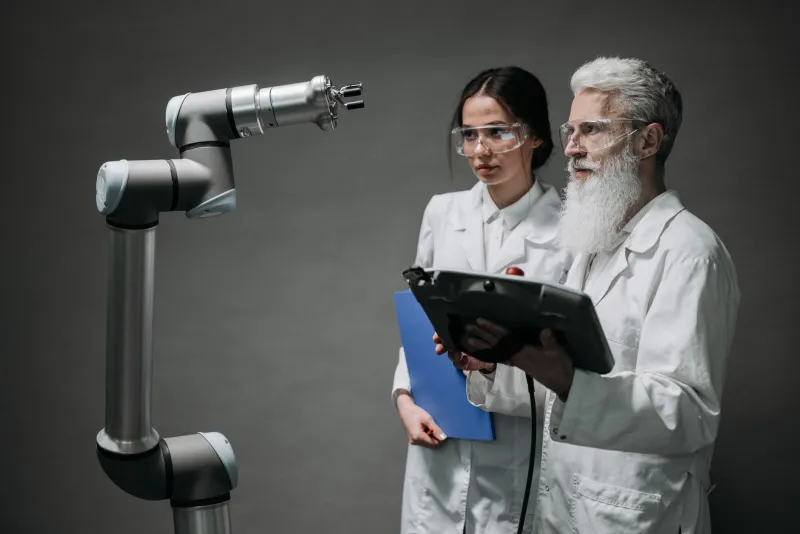
The conventional map of academic knowledge—with its neatly bounded departments, specialized journals, and discipline-specific methodologies—was never a perfect representation of reality. Problems in the world do not arrive pre-sorted by field. Yet for most of the twentieth century, the organizational logic of the research university reinforced disciplinary separation as both a professional and an epistemological norm.
Artificial intelligence is now disrupting that norm with unusual force. Not because it is simply a new tool available to any discipline, but because its most productive applications tend to emerge precisely at the intersections between fields—where computational power meets domain expertise, where algorithmic pattern recognition encounters humanistic interpretation, where clinical intuition is formalized into training data. What follows is an examination of seven areas where cross-disciplinary AI collaboration is producing results that neither partner could have reached independently.
1. Computational Biology and Protein Structure Prediction
The announcement of AlphaFold2 by DeepMind in 2020 sent reverberations through biology departments across the United States. For the first time, an AI system could predict the three-dimensional structure of proteins with accuracy approaching experimental methods—a problem that had resisted decades of purely biochemical inquiry. The teams behind such advances are invariably composed of machine learning engineers working in close dialogue with structural biologists, each bringing knowledge the other lacks. American research centers including the Broad Institute and UCSF have since built dedicated computational biology units that formalize this collaboration, training a new generation of scientists who are fluent in both biological mechanism and algorithmic design.
2. Digital Humanities and Large Language Models
Historians, literary scholars, and linguists at institutions such as Stanford's Center for Spatial and Textual Analysis and the University of Nebraska's Center for Digital Research in the Humanities are deploying large language models to analyze corpora of text at scales previously unimaginable. A project that might once have required a scholar to spend a career reading eighteenth-century pamphlets can now produce preliminary pattern analyses in days, freeing human interpreters to focus on contextual depth and critical judgment. The collaboration requires computer scientists to understand what constitutes a meaningful humanistic question—a discipline in itself.
3. Human-Centered Machine Learning
As AI systems are deployed in consequential social contexts—hiring algorithms, criminal risk assessment tools, medical diagnostic software—a field has emerged that brings together computer scientists, psychologists, sociologists, and legal scholars to examine how these systems interact with human behavior and institutional structures. Researchers at Carnegie Mellon's Human-Computer Interaction Institute and Cornell Tech's Connective Media program exemplify this orientation, producing work that is simultaneously technical and deeply attentive to social context. The field has generated influential scholarship on algorithmic fairness, explainability, and the distribution of AI-related harms across demographic groups.
4. Climate Informatics
Climate science has always been computationally intensive, but the integration of machine learning into atmospheric modeling, extreme weather prediction, and climate risk assessment has created a genuinely new interdisciplinary space. Teams at the National Center for Atmospheric Research and collaborating universities are pairing climate physicists with data scientists to build models that improve forecast accuracy while also generating insights about long-term climate dynamics. The practical stakes—informing infrastructure investment, disaster preparedness, and policy—give this collaboration an urgency that accelerates knowledge exchange across traditional disciplinary lines.
5. Computational Psychiatry
The intersection of neuroscience, clinical psychology, and machine learning is producing a field—computational psychiatry—that seeks to model the mechanisms underlying mental illness with mathematical precision. Researchers at institutions including Baylor College of Medicine and Princeton's Neuroscience Institute are developing computational models of decision-making, reward processing, and learning that can be tested against behavioral and neuroimaging data. The ambition is not merely descriptive but therapeutic: to identify biomarkers and mechanistic signatures that could guide more personalized psychiatric treatment.
6. AI-Assisted Materials Science
The discovery of new materials—for batteries, semiconductors, pharmaceuticals, and structural applications—has historically been a slow, trial-and-error process. Machine learning models trained on large materials databases are now capable of predicting the properties of hypothetical compounds before they are synthesized, dramatically accelerating the discovery pipeline. The Materials Project at Lawrence Berkeley National Laboratory and similar initiatives bring together chemists, physicists, and computer scientists in collaborative frameworks that are redefining what materials research looks like at the frontier.
7. Sociolinguistics and Natural Language Processing
Natural language processing researchers and sociolinguists are finding that their respective methods are mutually corrective in productive ways. NLP systems trained on internet text inherit the linguistic biases and demographic skews of their training corpora, a problem that sociolinguists are uniquely positioned to diagnose and address. Conversely, computational methods offer sociolinguists the ability to track language change, dialectal variation, and discourse patterns across populations and time periods at unprecedented scale. Collaborative projects at the University of Washington and Georgetown's linguistics department illustrate how this partnership is enriching both fields.
What Universities Can Learn
Across these seven domains, certain organizational features recur. Successful interdisciplinary AI collaborations tend to be housed in dedicated centers or institutes that provide physical and intellectual space outside traditional departmental structures. They tend to involve graduate training programs that deliberately cultivate bilingual competence across disciplinary vocabularies. And they tend to be supported by funding mechanisms—such as NSF's Convergence Accelerator or NIH's Big Data to Knowledge initiative—that explicitly reward cross-disciplinary team science.
The deeper lesson for American research universities is structural: the conditions that allow these collaborations to flourish do not emerge spontaneously from existing departmental arrangements. They require deliberate institutional design, administrative will, and a willingness to evaluate faculty contributions by criteria that traditional promotion systems were not built to capture. The fields that are generating the most consequential scholarship today are those where the organizational imagination of the institution has kept pace with the intellectual ambitions of its researchers.